The Up Co

Initial Hero Image

Project overview

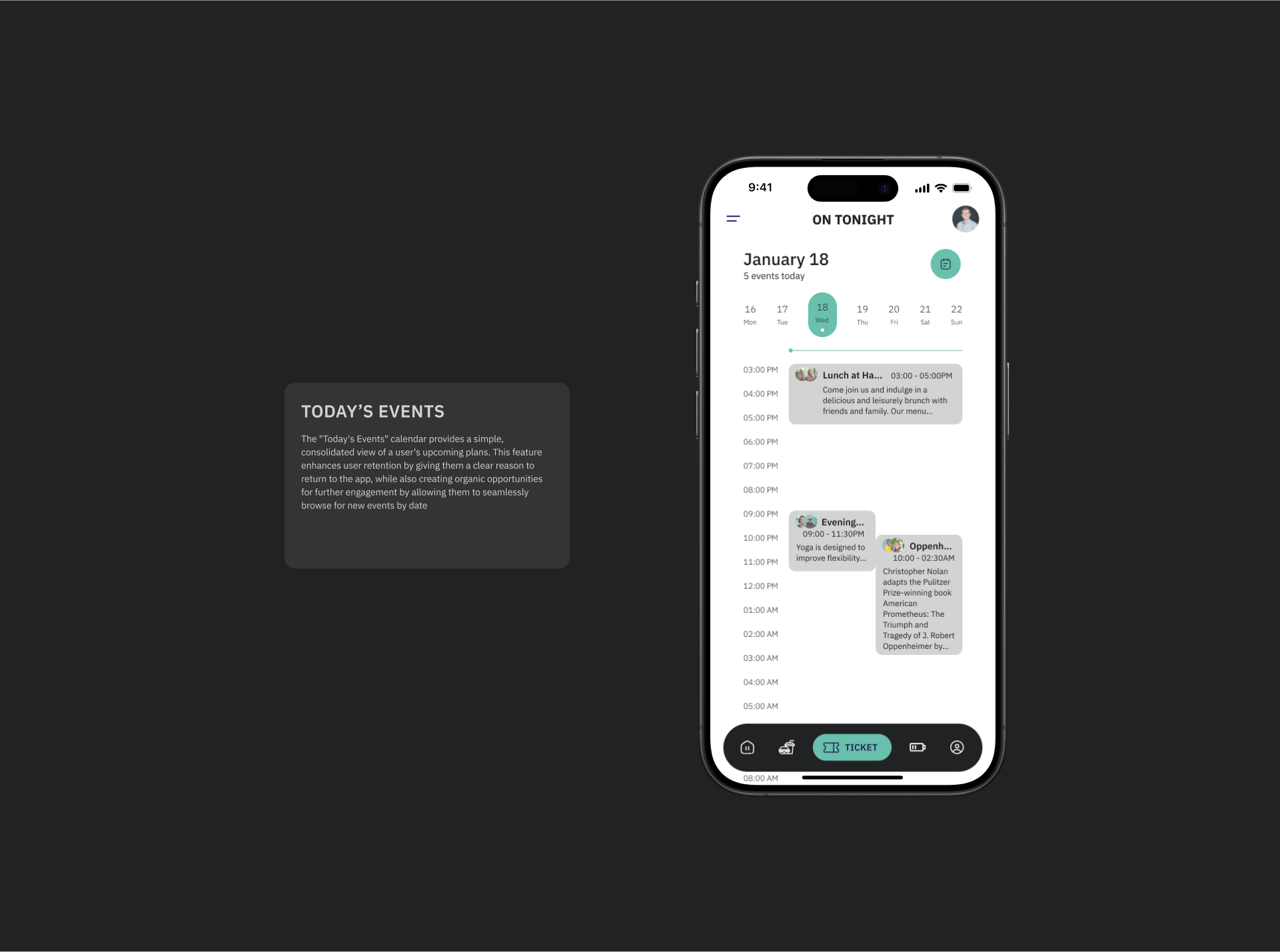
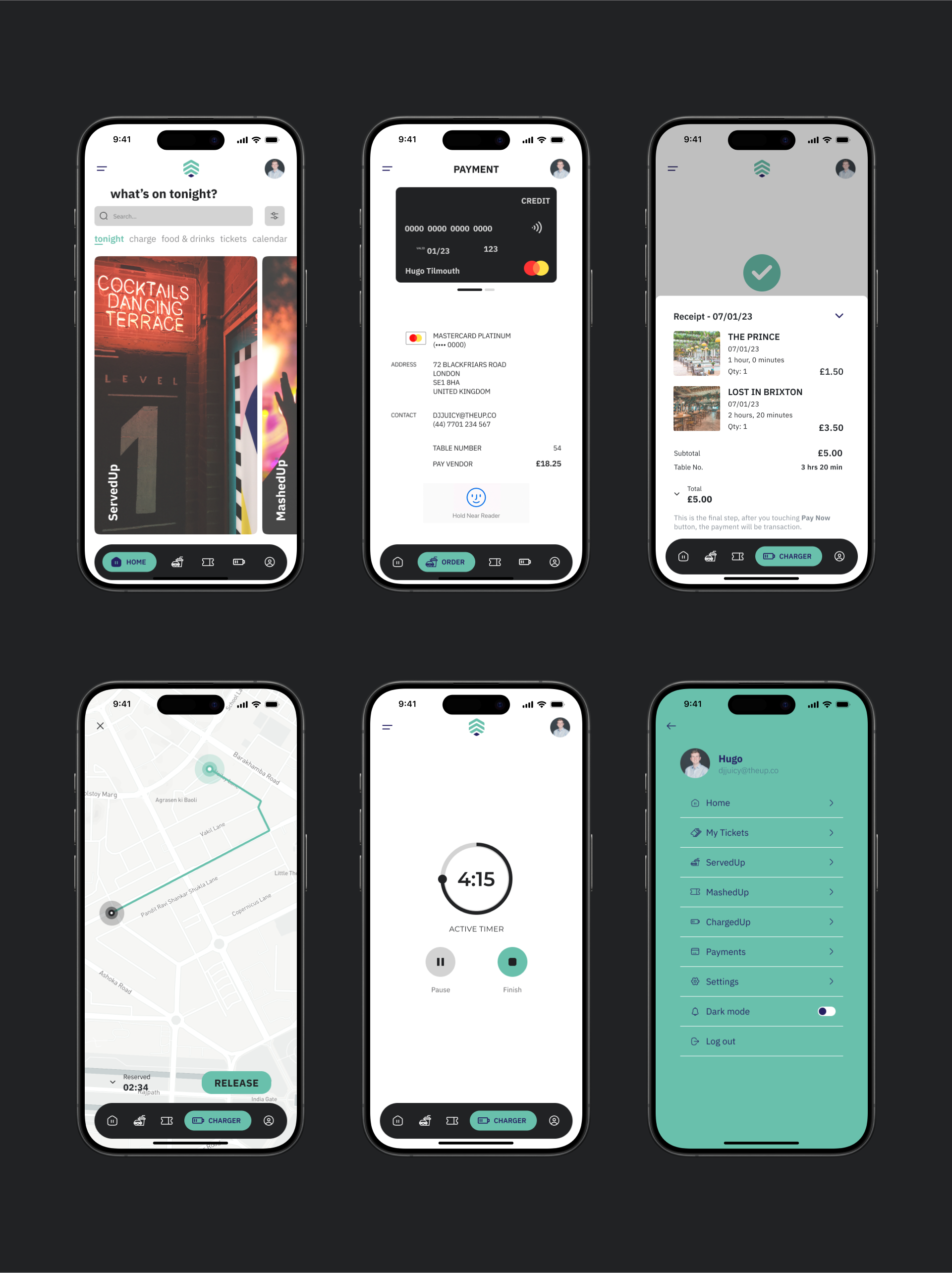
The UP Co. is a mobile application designed to unify the hospitality experience by allowing customers to order food, event tickets, and services from a single, cohesive platform. As the lead designer, my primary goal was to streamline a complex user flow, resulting in a more intuitive and efficient ordering process.

Business opportunity

The key business opportunity was to create a frictionless "super-app" for hospitality venues that could improve customer experience and operational efficiency. By successfully integrating three distinct services (food ordering, event ticketing, and charger rentals) into one app, The UP Co. could offer a unique, all-in-one solution that competitors could not match.

Role & ownership

As the sole freelance product designer, I owned the end-to-end user experience. My responsibilities covered the full design lifecycle, from initial competitor and user research, through to information architecture, wireframing, UI design, prototyping, and usability testing.

Outcome

The redesigned low-fidelity prototype successfully resolved the major pain points identified in user research. Usability testing validated a much-improved navigation flow between the three services and a more streamlined ordering process. The project delivered a clear, validated design direction for future high-fidelity development.

Final Designs

No items found.

design process breakdown

Competitive Audit

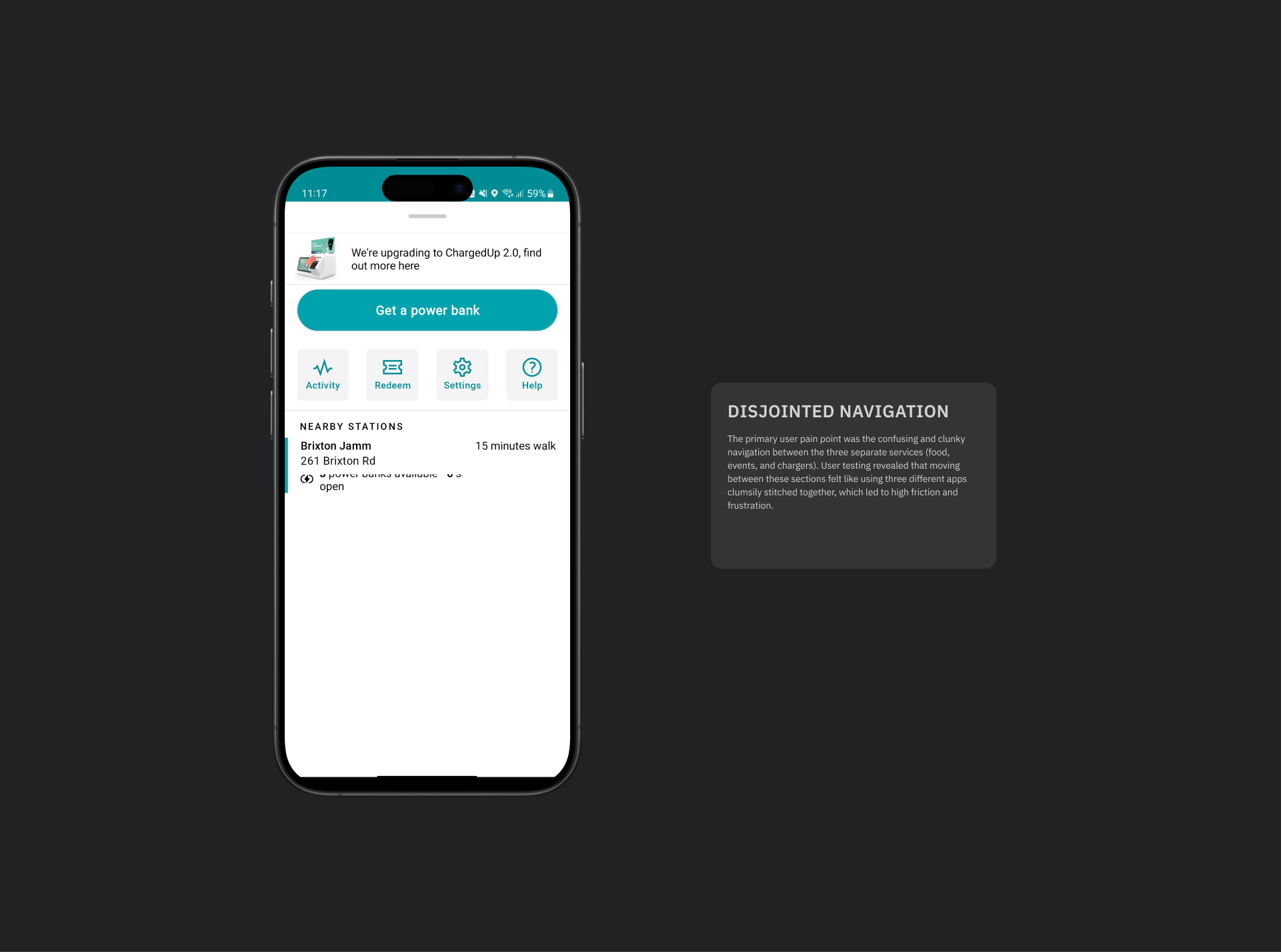
Create a truly unified experience: The most significant opportunity was to integrate three distinct services—food ordering (ServedUp), event ticketing (MashedUp), and charger rentals (ChargedUp)—into a single, cohesive application. This would provide a powerful market differentiator and a far more convenient experience for users.

Insight 1

The most significant opportunity was to integrate three distinct services—food ordering (ServedUp), event ticketing (MashedUp), and charger rentals (ChargedUp)—into a single, cohesive application. This would provide a powerful market differentiator and a far more convenient experience for users.

Insight 2

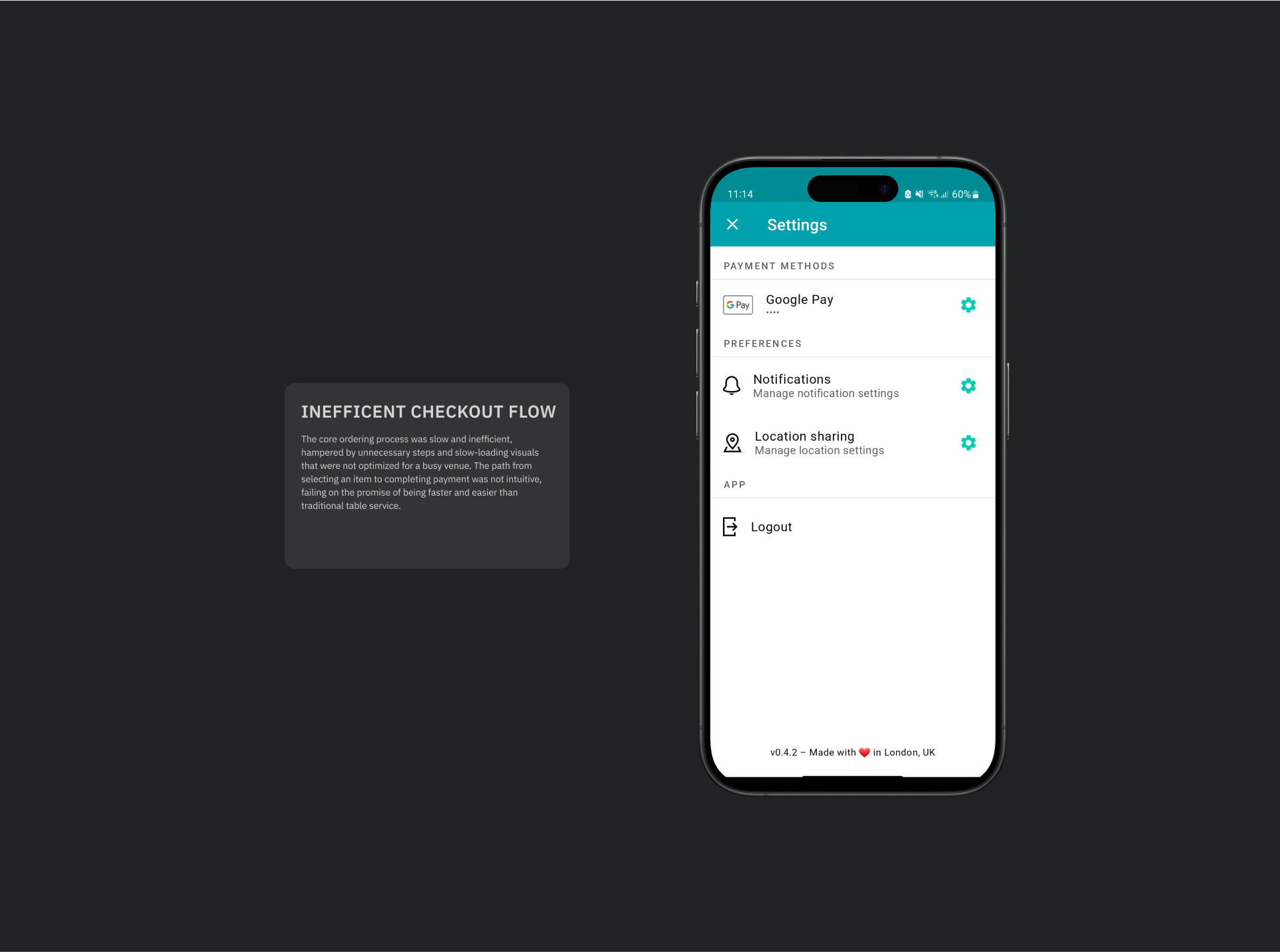
Prioritise speed over superfluous visuals: We observed that competitors often used large, slow-loading images that, while visually appealing, frustrated users in venues with poor internet. This created a clear opportunity to design a fast, minimalist UI that helps users complete their primary task—ordering—as quickly and efficiently as possible.

Insight 3

Design for real-world accessibility: Competitors showed limited consideration for the real-world conditions of a diverse user base. We saw an opportunity to create a more inclusive and robust platform by designing for challenges like unreliable internet connections and by building in enhanced accessibility features from the start.

Problems Identified

No items found.

Wireframing

My goal during wireframing was to solve the core challenge of unifying three distinct services into a single, intuitive application. I began with rapid sketching to explore different ways of integrating the food, events, and charger rental services, focusing on identifying shared UI patterns and overlaps that could create a consistent user experience. This achieved stakeholder alignment on a unified structural approach. From these foundational sketches, I developed low-fidelity prototypes specifically designed to test our proposed solution for the disjointed navigation and to validate a more streamlined, efficient ordering flow with real users.

Information to be added

Research Overview

To validate our new, unified design, I conducted a series of remote unmoderated usability studies using the low-fidelity prototype. The primary goal was to test whether our proposed solution successfully solved the key navigation and ordering problems we had previously identified. The feedback was essential for refining the design before moving to high-fidelity.

Insight 1

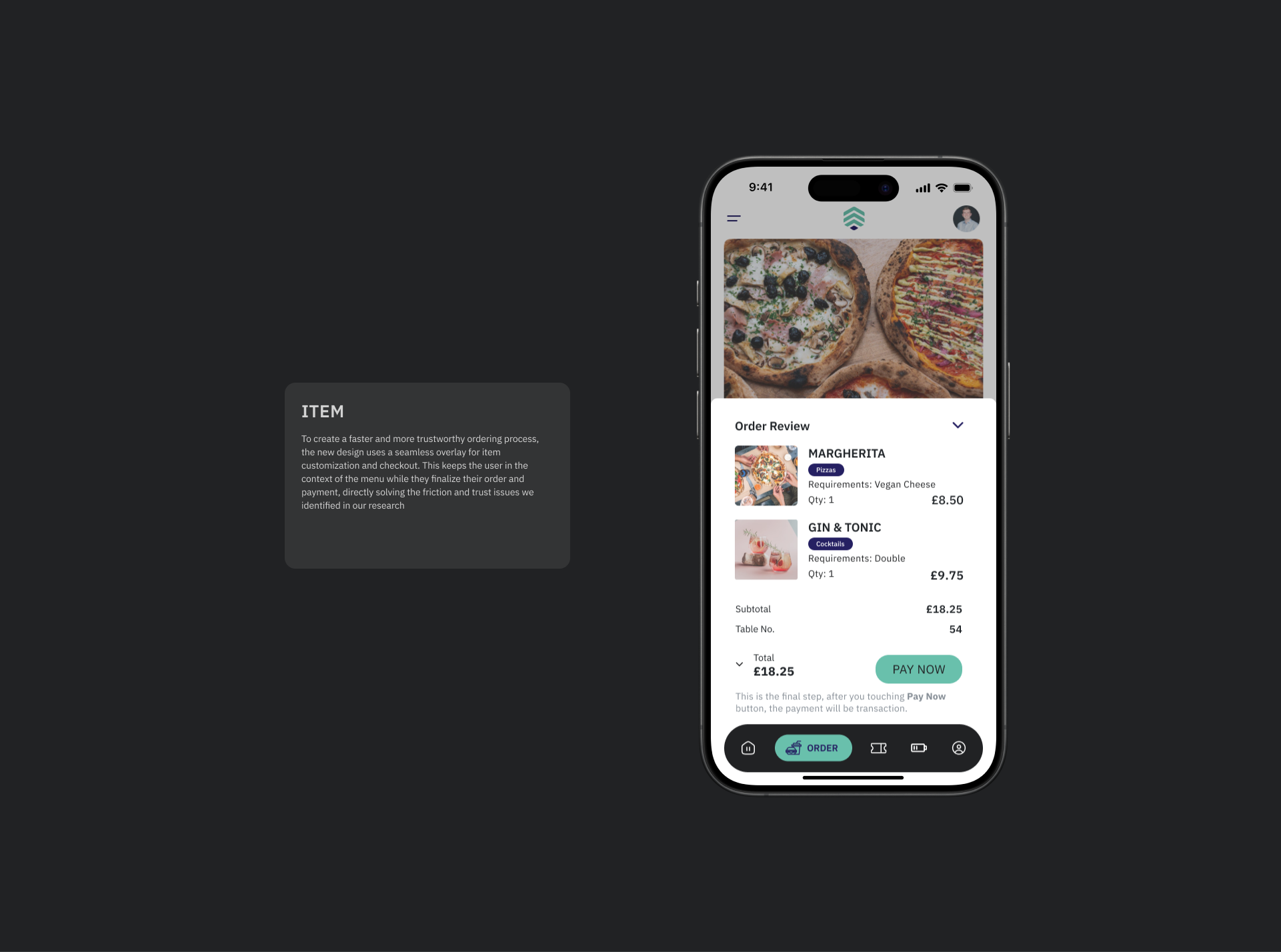
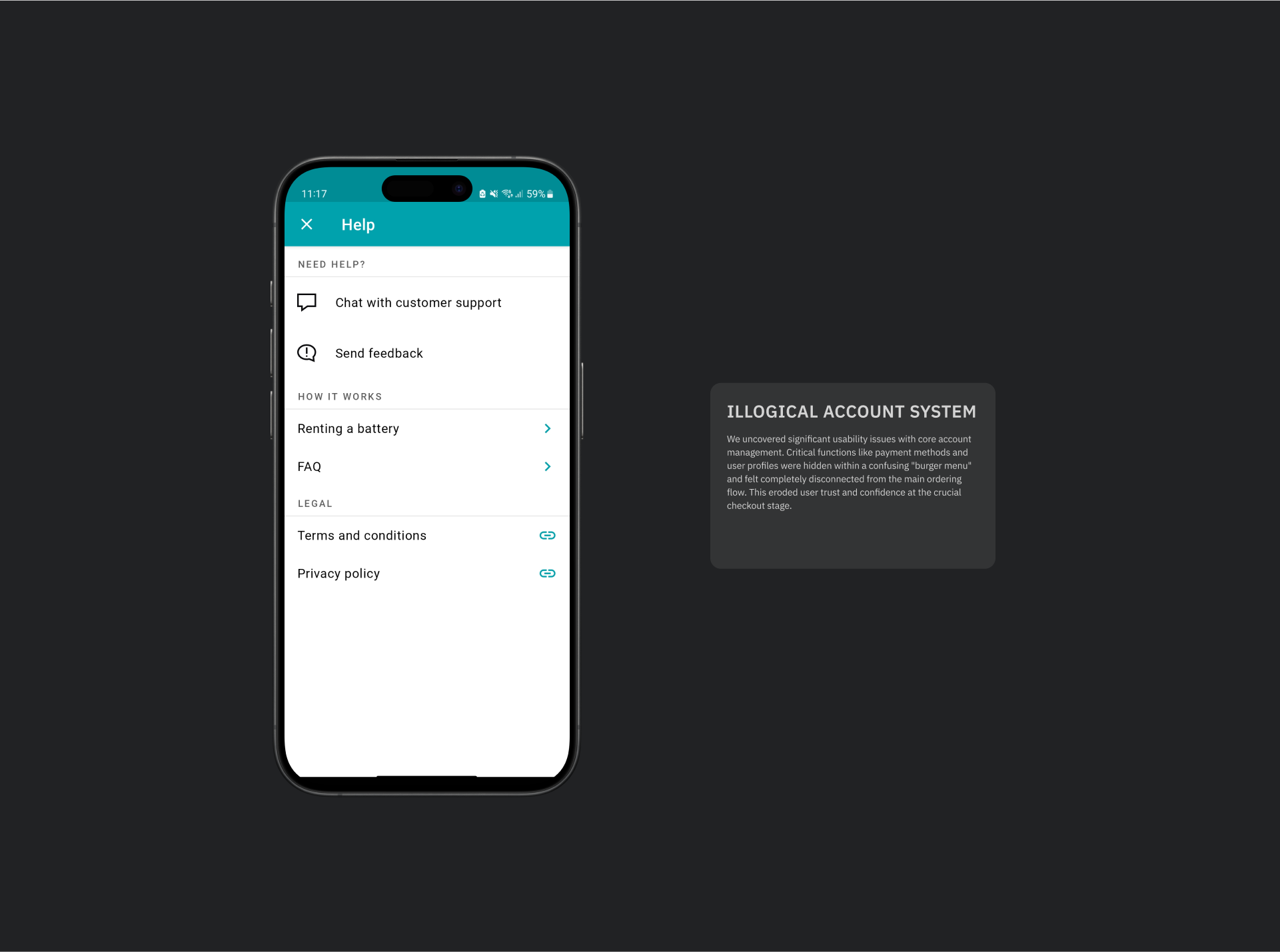
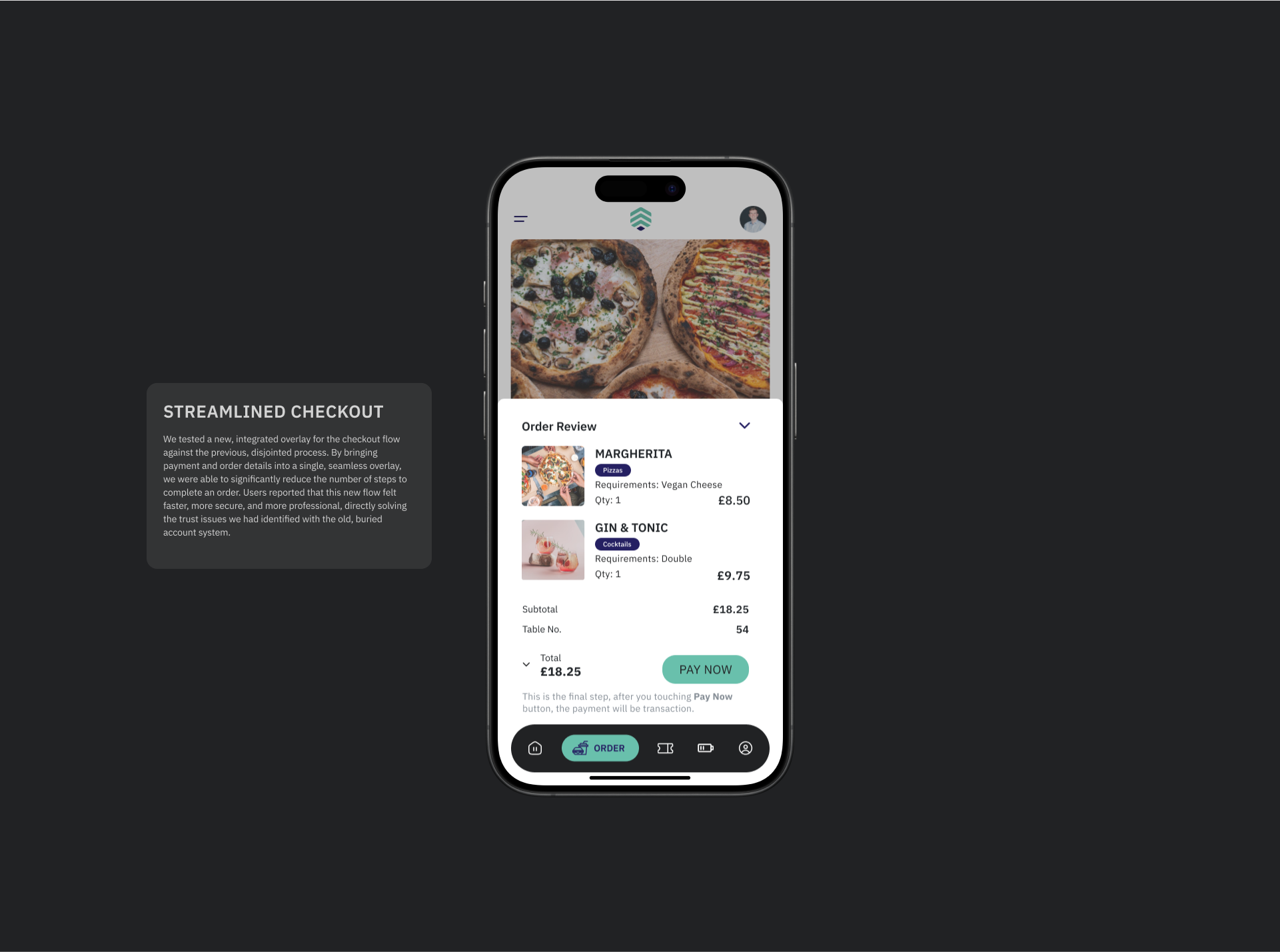
A Disconnected Profile Erodes Trust at Checkout. We observed users becoming hesitant during the final payment step. The reason was a lack of a clear, integrated connection between their order and their profile/payment information. This taught us that for users to feel secure, these elements must feel like part of a single, seamless journey, not separate sections.

Insight 2

Core Actions Must Be Visible and Contextual. Our testing revealed significant friction with the "burger menu." Users consistently did not think to look there for essential actions. We learned that critical functions, especially those related to the main task of ordering, need to be visible and accessible within the primary user flow, not hidden in a generic, out-of-context menu.

Insight 3

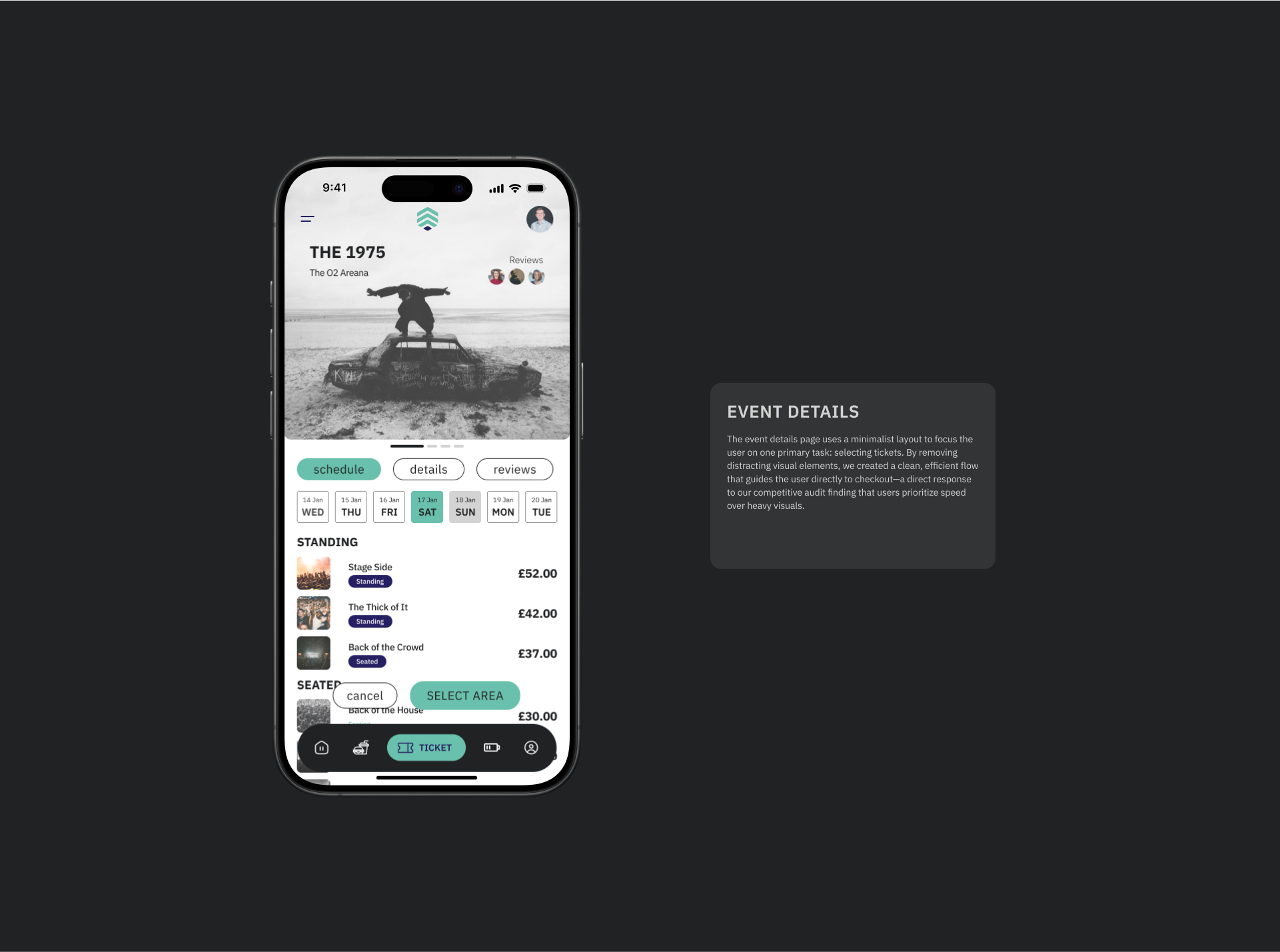
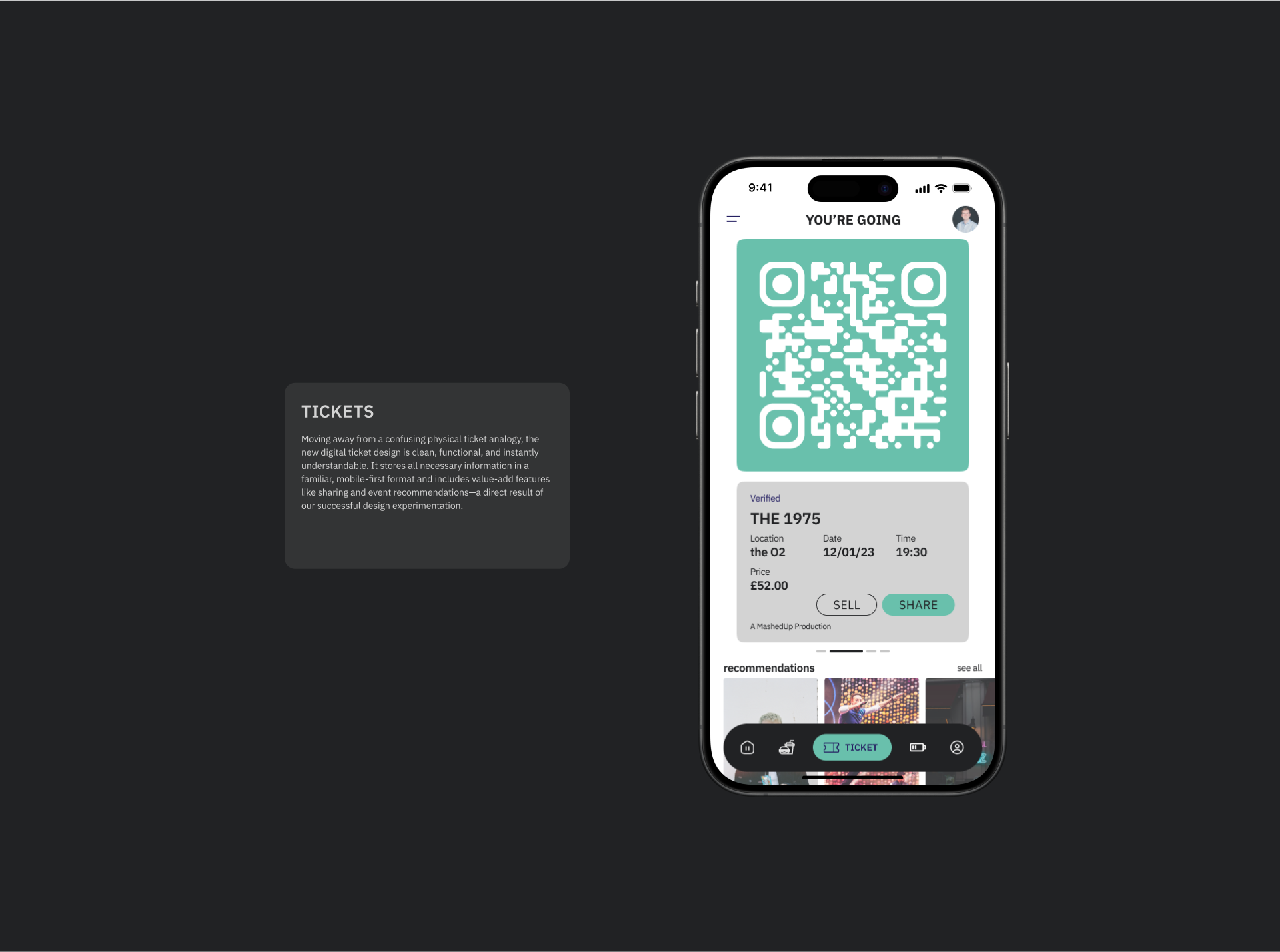
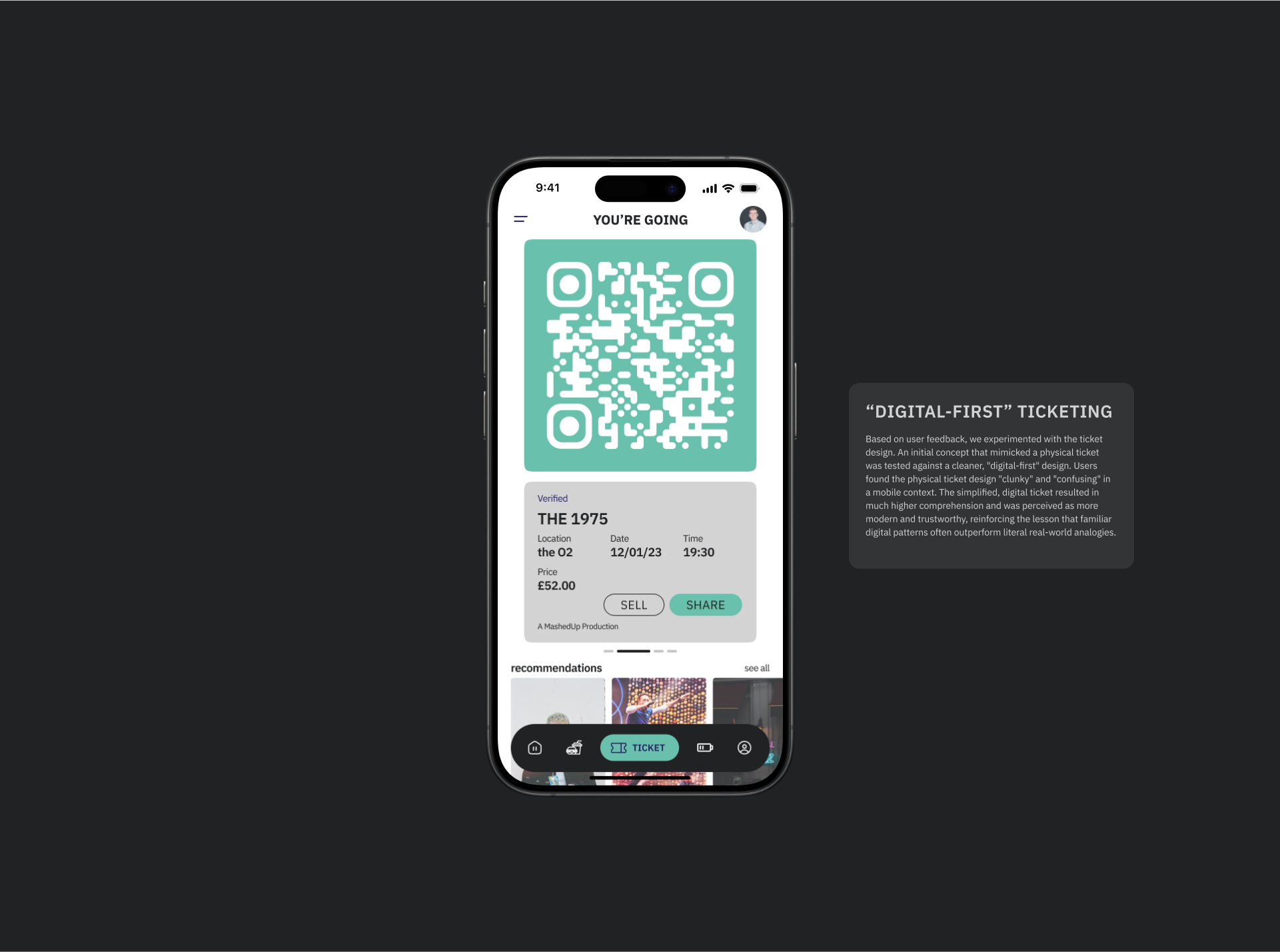
Visual Inconsistency Causes Functional Confusion. Even in a low-fidelity prototype, users were confused by the "ticket" element because its visual style didn't align with the rest of the app. This was a powerful lesson that visual design is not just decoration; UI inconsistencies can break a user's mental model and make them question a feature's purpose and legitimacy.

Information Architecture

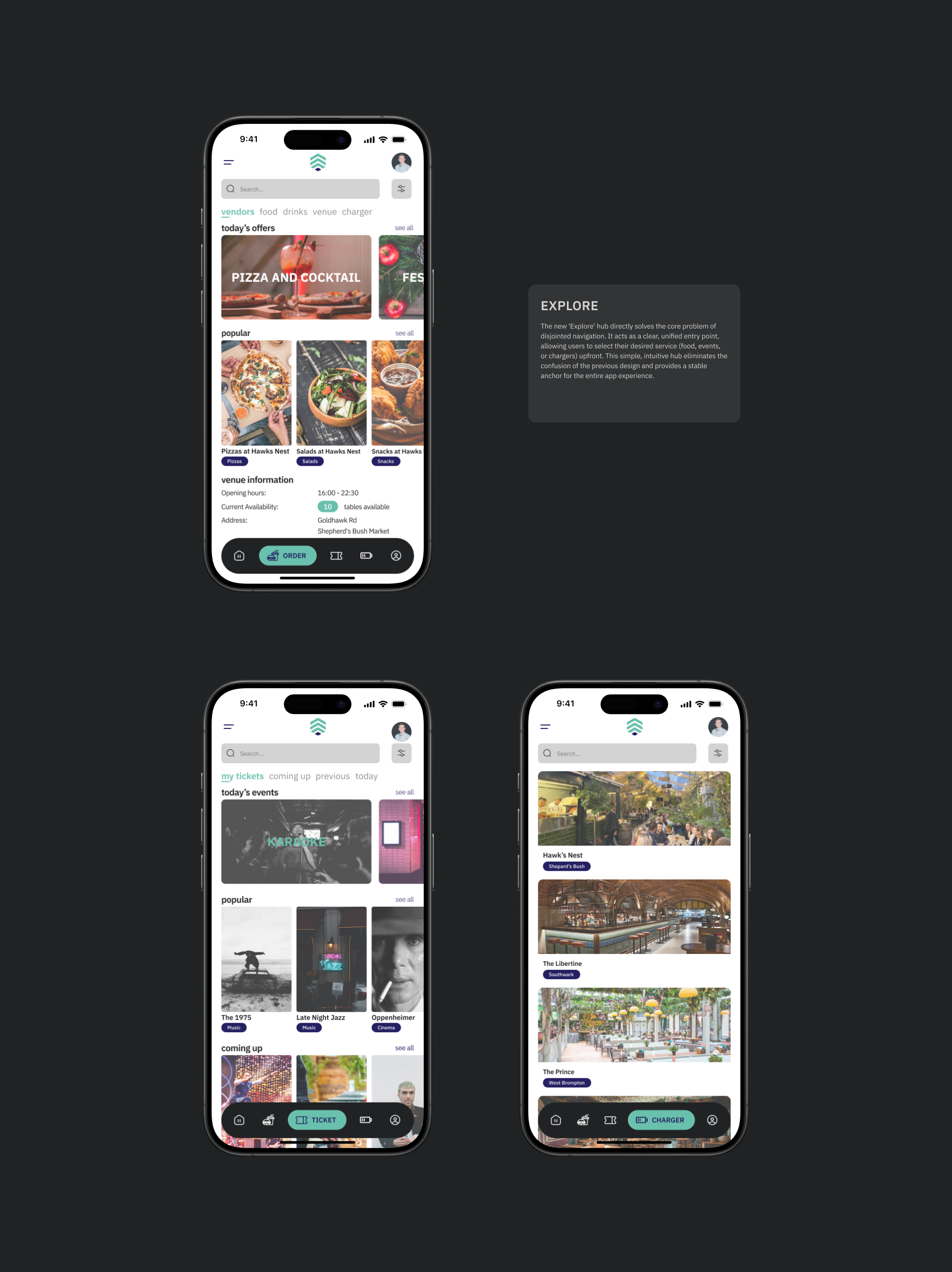
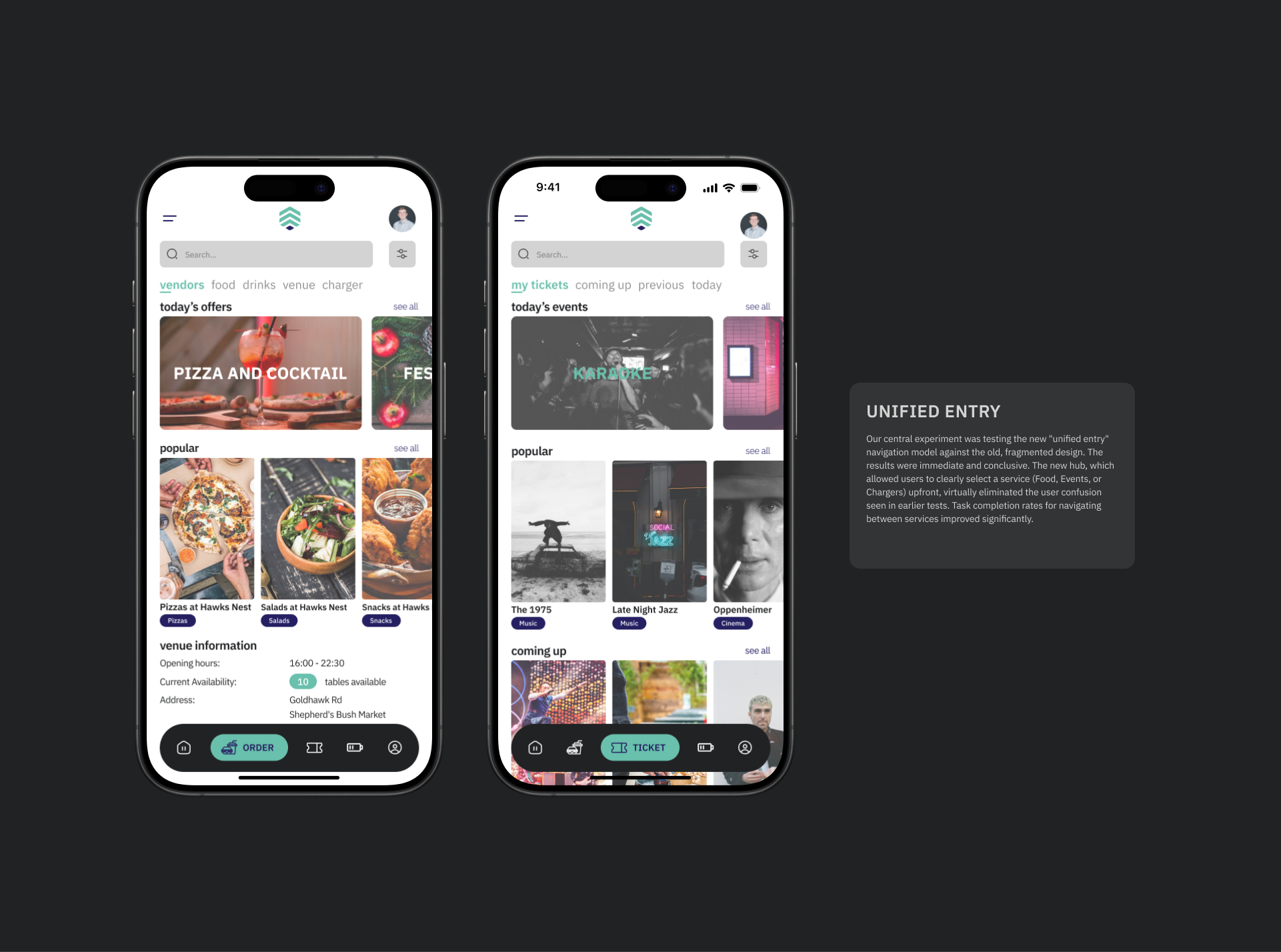
The information architecture was redesigned with one primary goal: to solve the fragmented navigation discovered in the research. By adopting a mobile-first, "unified entry" model that fundamentally restructured the user's journey. Instead of three siloed applications, the new IA presents users with a clear choice of service upfront. Before guiding them down a specific, task-oriented flow. This structure ensures users are always aware of where they are in the app and provides a consistent framework that makes navigating between the different services intuitive and predictable, directly solving the core usability issues of the previous design.

Information Architecture

Experimentation

No items found.
Final Hero Image

Lessons learnt

As my first freelance project working on a live product, The UP Co. was a valuable lesson in adapting to existing technical constraints and managing client relationships. The challenge was to balance the client's vision with user needs and technical feasibility, all while delivering tangible improvements to a product already in the market.
Lesson 1

Design for the Entire Business Ecosystem. This project taught me the importance of looking beyond the immediate customer-facing app. I learned that improving the diner's experience is only half the battle; providing a functional and efficient interface for the vendors and venue staff on the other side is just as critical to the service's overall success.

Lesson 2

The Freelancer's Role as a Strategic Partner. I learned that the role of a freelance designer isn't just to execute a brief, but to act as a strategic partner. This meant effectively communicating the "why" behind my design decisions, using evidence from user research to guide the client's priorities, and building a collaborative relationship based on trust and shared goals.

Lesson 3

Know When to Increase Prototype Fidelity. While low-fidelity prototypes were perfect for solving the core navigational problems, I learned they have their limits. To get meaningful feedback on more nuanced interactions and the overall brand feel, users needed to see and interact with a high-fidelity design. This taught me the importance of choosing the right tool and fidelity for the specific questions you need to answer at each stage of the process.

next project